

In the final months of 2015, my much-beloved partner of eleven years, J., was the victim of two brutal attacks. After the second, he was diagnosed with post-traumatic stress disorder (PTSD). In August 2019, after a failed attempt to check him into a behavioral health crisis center, we realized that our mental health and our relationship weren’t improving. They were eroding, close to collapse.
I am an academic and an investigative journalist. When faced with an existential threat or deep question, I research. I write. I read books. PTSD Bookclub is where I’ll share my journey through great books about trauma and its aftermath.
Starting April 2021, I’ll re-read the twelve books that most helped me cope: provided a crucial new insight, made me feel seen and validated, or simply offered hope and courage. I’ll try to read a book a month, posting weekly short reflections on the book’s most resonant contributions, insights drawn from my own experience, interviews and related research.
If you’d like to receive the blog via email — roughly once a week — scroll down to “Join the Conversation” and enter your email. If you want to jump right in and read from the first blog, GO HERE – >
From the blog
Join the conversation!
(Enter your email below to receive notifications when I update the blog.)
While there will be room to talk about the traumas that brought PTSD into our lives, from sexual assault to military service to systemic racism, this space won’t be geared toward peer support or group therapy. There are other great venues for that important work. Check out the Trauma Book Club, the Spouses & Family Members’ PTSD Support Group, or find a PTSD support group through NAMI (the National Alliance on Mental Illness).
If you or anyone you know is in danger or crisis, here is a good list of numbers to call or text or TTY for support: https://autistichoya.net/resources/crisis-resource-list/ (via the indomitable Lydia X. Z. Brown).
If you are a US veteran who needs support, contact the Veterans Crisis Line:
- 1-800-273-8255, press 1
- Send a text to 838255
- Chat online Confidential Veterans Chat
About Me
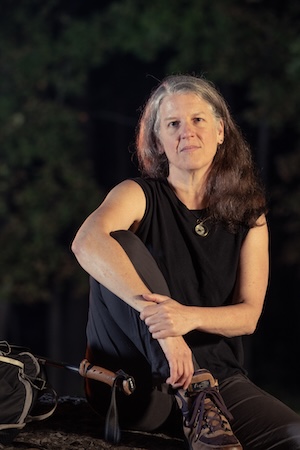
I am a professor and an investigative journalist whose work has appeared in The New York Times Magazine, Harper’s Magazine, The Guardian, WIRED.com, and Scientific American. She is the author of the award-winning book Automating Inequality: How High-Tech Tools Profile, Police, and Punish the Poor. When not sleeping in her truck in the Adirondacks, she lives in Troy, New York. Read more
 Virginia Eubanks
PTSD sufferer here-initially from bearing witness to my mothers suicide and after years of treatment having my symptoms triggered again by a spontaneously collapsed lung. Your article made me feel understood and also gave me a strong reminder to the efforts and impacts on my wife of 11 years. I get triggered every time she even sneezes (loudly). Often the caregivers are forgotten and I am grateful you have shed light on all of them; including yourself.
Just read your PTSD article from NYTimes, wanted to let you know that I admire your bravery, strength and persistence in helping your partner heal. I’m a nurse but reading your article, I felt that sense of caregiver burden. I wish you and your partner the best, and hopes of recovery!
Your NYT article is phenomenal.
I am dual PTSD sufferer and caregiver. A sufferer, after my young daughter’s life was ripped apart by a ruptured brain aneurysm and caregiver for my elder teen-daughter who was raped a few years later and eventually hospitalised with PTSD.
When you spoke to the daily trauma wrought from the interminable fight of administrative bodies, fighting for healthcare… the hollowing out of yourself by these small enduring brutalities…I shuddered with cognition. Thank you for you raw, honest writing. Nothing I have researched, watched, listened to, has spoken to me in such an authentic, resonating way of my own experience, as the recounting of your own. I am truly grateful for this dignified piece.
I wish you both a calm heart, a clear head and a Springtide of wellness.